Welcome to my blog!

ABOUT THIS BLOG

People with good general knowledge get more attention and they also have an advantage in starting a conversation. So if you are wondering how to Earn Knowledge, then this BLOG is for you.

Looking for something?

Subscribe to this blog!

Receive the latest posts by email. Just enter your email below if you want to subscribe!

If you are wondering how to improve your GK, then this blog is for you.

Showing posts with label 10 facts. Show all posts

10 Facts that are not actually facts


1. Mt. Everest is the tallest mountain in the world. FALSE. Mauna Kea is actually the tallest.
2. The Great Wall of China is the only man-made object visible from space. FALSE. You can see other man-made objects from space, also it's also pretty hard to pick out the Great Wall of China from any space-based locale.
3. Different parts of your tongue detect different tastes. FALSE AGAIN. After some experiments, it turns out people can sense different tastes all over their tongues.
4. Chameleons change color to blend in with surroundings. ANOTHER FALSE FACT. Instead, chameleon color-changing is typically triggered by physical, physiological and emotional changes.
5. Humans only have 5 senses. FALSE. We actually have 20+ senses, including balance, temperature, proprioception, etc.
6. It takes seven years to digest swallowed chewing gum. NOT TRUE. In fact, you don’t even digest it at all.
7. A penny dropped from a tall building can kill someone on the ground. NOPE. A person on the ground would most certainly feel a sting from the impact, but the penny wouldn't kill.
8. Humans explode in the vacuum of space. DEFINITELY FALSE. But you will die though, because there's no oxygen there.
9. We only use 10 percent of our brains. NOT TRUE. Imaging technologies like fMRI reveal that we use most or all of our brains in one way or another.
10. Antibiotics kill viruses. NO. Antibiotics are wonderful little targeted poisons that help your body kill bacteria -- that's bacteria, not viruses
Enter
 

10 facts about Tom and Jerry


1. In their very first outing in 1940, Tom was actually called Jasper, while Jerry – though nameless in the cartoon itself – was referred to as Jinx by the animators!
2. Tom and Jerry are American as apple pie – except for a really weird period in the 60s when the cartoons were made in Czechoslovakia.
3. There was once a suspiciously similar knock-off series called Herman and Katnip. The antics of this particular cat and mouse aren't that well-remembered today, which is odd since its theme tune is almost nightmarishly catchy.
4. Bet you didn't know Tom and Jerry had a spin-off? Made in the 1950s, it was called Spike & Tyke and featured the adventures of that big bulldog we often saw beating Tom up.
5. It's a myth that Tom and Jerry were silent characters. They both uttered lines throughout the decades, and in the 1992 movie they couldn't keep their traps.
6. Tom and Jerry won seven Academy Awards.
7. TOM and JERRY were first created for an advertisement where Jerry hides from Tom in the car, and the narrator tells the viewers that their new car is the safest place to hide for.
8. Traditionally, music plays a very important part in Tom and Jerry shorts–since Tom and Jerry almost never speak–effectively emphasizing the action, adding emotion to the scenes, and filling in for traditional sound effects.
9. So who actually created Tom and Jerry? It was animation's most successful ever partnership – William Hanna and Joseph Barbera.
10. There’s a Tom and Jerry episode where they both commit suicide!
Enter
 

10 facts about India


1. India belongs to the continent of Asia, it is bordered by the countries of Bangladesh, Bhutan, Burma, China, Nepal, and Pakistan.
2. India has the second largest population in the world, with over 1.2 billion people (1,205,073,612 as of July 2012).
3. India is the seventh largest country by total area.
4. The highest mountain in India is Kanchenjunga, standing at 8,598 m (28,209 ft), which it shares with Nepal. Kanchenjunga is the third highest mountain in the world.
5. Many different languages are spoken in India. The main ones are Hindi, Bengali, Telugu, Marathi, Tamil, and Urdu.
6. The capital city is New Delhi, while the most populated city is Mumbai. Other major cities include Kolkata, Chennai and Bangalore.
7. Because of India's location, it experiences periods of heavy rain called Monsoon.
8. The Taj Mahal (a famous mausoleum and popular tourist attraction) is located in the region of Agra.
9. India became an independent nation in 1947 after ending British rule that began in 1858. Mahatma Gandhi is famous for the important part he played in gaining India's independence.
10. The most popular sport in India is cricket, with the Indian team being the first to win the Cricket World Cup on home soil when they were victorious in 2011.

Photo: The Kedar Range of the Greater Himalayas rises behind Kedarnath Temple (Indian state of Uttarakhand), which is one of the twelve jyotirlinga shrines.
Enter
 

10 facts about Antarctica


1. Antarctica is the coldest, windiest, highest and driest continent on the planet.
2. Antarctica contains 90% of the world's ice.
3. One of the biggest dangers to researchers and others living on the continent is actually fire. The dry environment makes it very possible and hard to stop.
4. In wintertime, the sea ice around Antarctica grows at the rate of 40,000 square miles a day.
5. Antarctica’s ice is so heavy that it deforms the South Pole. In fact, its weight makes the Earth look slightly pear shaped.
6. Antarctica holds the top spot for the lowest recorded temperature on Earth, which was -129°F (-84.5°C) at the Russian Vostok station in 1983. At this temperature steel will shatter and water will explode into ice crystals.
7. There are no countries in Antarctica; the continent is governed by an international treaty (the Antarctic Treaty). Today seven countries have made territorial claims (Argentina, Australia, Chile, France, New Zealand, Norway and UK), but not all countries, including the USA and Russia, recognise these claims.
8. Mount Erebus is the only active volcano in Antarctica.
9. The number of breeding pairs of penguins in Antarctica is estimated to be 20 million.
10. During summer more radiation reaches the South Pole than the equator. This is because the hole in the ozone layer above the Antarctic is the largest on record at 27 million square km.
Enter
 

10 facts about the Bermuda Triangle


1. Located in the Atlantic Ocean, the Bermuda Triangle falls between Bermuda, Puerto Rico and Florida.

2. The Bermuda Triangle has long been believed to be the site where a number of mysterious plane and boat incidents have occurred.
3. While it has become part of popular culture to link the Bermuda Triangle to paranormal activity, most investigations indicate bad weather and human error are the more likely culprits.
4. Research has suggested that many original reports of strange incidents in the Bermuda Triangle were exaggerated and that the actual number of incidents in the area is similar to that of other parts of the ocean.
5. While its reputation may scare some people, the Bermuda Triangle is actually part of a regularly sailed shipping lane with cruise ships and other boats also frequently sailing through the area.
6. Aircraft are also common in the Bermuda Triangle with both private and commercial planes commonly flying through the air space.
7. Stories of unexplained disappearances in the Bermuda Triangle started to reach public awareness around 1950 and have been consistently reported since then.
8. Unverified supernatural explanations for Bermuda Triangle incidents have included references to UFO’s and even the mythical lost continent of Atlantis.
9. Other explanations have included magnetic anomalies, pirates, deliberate sinkings, hurricanes, gas deposits, rough weather, huge waves and human error.
10. Some famous reported incidents involving the Bermuda Triangle include:

The USS Cyclops and its crew of 309 that went missing after leaving Barbados in 1918.

The TBM Avenger bombers that went missing in 1945 during a training flight over the Atlantic.

A Douglas DC-3 aircraft containing 32 people that went missing in 1958, no trace of the aircraft was ever found.

A yacht was found in 1955 that had survived three hurricanes but was missing all its crew.
Enter
 

10 Facts about the ebola virus


1. Ebola kills about 90% of its victims.
2. The Ebola virus is named for the Ebola River, where the first outbreaks occurred in 1976.
3. Humans are not the natural hosts of the Ebola virus, and it's believed that the first person in any outbreak became infected through contact with an infected animal. Animals that are reported to have spread disease to humans include chimpanzees, gorillas, forest antelopes and cynomolgus monkeys.
4. Since Ebola was discovered, nearly 4,000 cases and more than 2,400 deaths have been reported, according to the WHO.
5. Early symptoms can include fever, headache, joint and muscle aches, sore throat and weakness, followed by diarrhea, vomiting and stomach pain. In some cases, the disease causes rashes, red eyes, hiccups and internal and external bleeding.
6. There are five known strains of the virus. They are named after their outbreak locations: Ebola-Zaire, Ebola-Sudan, Ebola-Côte d’Ivoire, Ebola-Reston, and Ebola-Bundibugyo.
7. A deceased person with Ebola can still transmit the virus.
8. Right now, only supportive therapy is available, which includes maintaining proper fluid and electrolyte balance, maintaining blood pressure and oxygen levels, and treating complicating infections.
9. Clearly, the biggest impact comes in the form of the Americans who have been infected. Two Americans, both stricken with the disease, were brought back home in recent days for treatment.
10. There is a potential treatment that exists: An experimental serum that had previously only been tested on monkeys. Doses of the serum were administered to Brantly and Writebol, and while it is unclear so far whether the serum did anything, initial reports suggest that their conditions did improve after the treatment.
Enter
 

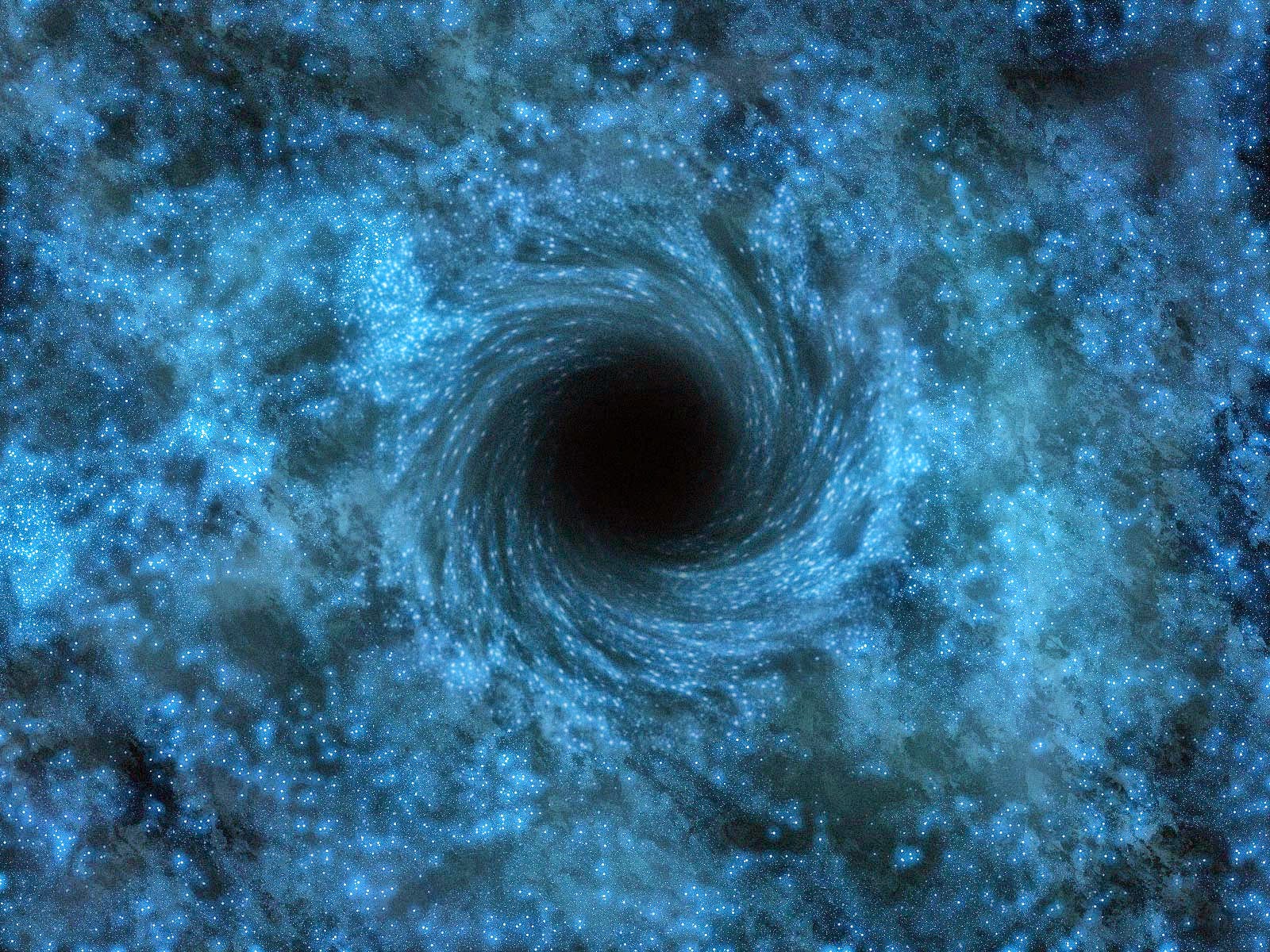
10 facts about Black Holes


1. A black hole is a region of spacetime from which gravity prevents anything, including light, from escaping.
2. Black holes are not always black. Although they are known for their blackness, they can do emit electromagnetic radiation.
3. Black holes are not actually funnel-shaped, but more like spheres.
4. Double black holes are thought to be the strongest source of the very much sought-after gravitational waves. This gravitational radiation ripples through the fabric of space-time, taking the form of waves and have never been observed directly.
5. There is a massive black hole at the center of Milky Way. It's 30,000 light years away and over 30 million times as massive as the Sun.
6. While Einstein did revive the theory of existence of black holes in 1916, John Mitchell actually thought of it first, back in 1783. The idea didn't go anywhere, though, because he didn't know what to do with it.
8. Clock run really slow near black holes. It all has to do with gravity.
9. Nothing can escape the pull of a black hole, UNLESS, it can move faster than the speed of light.
10. Carl Sagan said said "there are more stars in the universe than there are grains of sand on all the beaches of the world”. In fact, there are 10^22 stars in the universe.
Enter
 

10 facts about Leonardo Da Vinci


1. Unusual for a painter, Leonardo left no definitive image of himself.

2. Researchers at the University of Amsterdam and the University of Illinois used face-recognition software to determine that the Mona Lisa is 83% happy, 9% disgusted, 6% fearful, and 2% angry.
3. In 1994 Microsoft founder Bill Gates purchased perhaps Leonardo da Vinci’s most famous scientific writings, the ‘Codex Leicester’. It contains explanations of water movement, fossils and the moon among other things.
4. He is used to study in detail and create hundreds of drawings to explain his thoughts. The Vitruvian Man one of his famous drawing depicts the relationship between the human proportions and geometry.
5. Leonardo was the first to explain why the sky is blue. (It's because of the way air scatters light.)
6. His conceptual drawings included plans for musical instruments, war machines, calculators, boats and other ideas. Many of these plans were limited by the level of technology at the time.
7. Different to a typical surname you might think of today, "da Vinci" simply means "of Vinci", the Tuscan town where he was born. So Leonardo da Vinci literally means Leonardo of Vinci.
8. In December 2000, skydiver Adrian Nicholas landed in South Africa using a parachute built from one of Leonardo's designs.
9. He was a big fan of puns and word games, and Folio 44 of his Codex Arundel contains a long list of playful synonyms for penis.
10. According to a theory, Mona Lisa's smile means she was secretly pregnant.
Enter
 

10 Facts that Everyone gets Wrong:


1. "Humans Have Five Senses." There are lots more, too, although the lists vary and the final number-of-senses tally is in great dispute. One is "proprioception", which helps you pass the "close your eyes and touch your nose" test.

2. "Mount Everest Is The Tallest Mountain in the World." A mountain is highest in regard to how far it soars above sea level. Technically Mount Everest is tallest from base to summit but Mauna Kea kills it at being the highest summit.
3. "Columbus Was the First European to Discover North America." That honor generally goes to some Viking named Leif Erickson, who is believed by historians to have made his way from Scandinavia to Newfoundland a good five hundred years before ‘ol Chris was even born.
4. "Chameleons Change Color to Blend in with Surroundings." Chameleon color-changing is typically triggered by physical, physiological and emotional changes. They'll also change colors as a way of communicating in various manners and to pick a fight with a competitor. Light and temperature play a big part, too, in how these little fancy pantses look.
5. "Alexander Graham Bell Invented the Telephone." Some historians maintain that another fellow named Elisha Gray was the first to create a working telephone, only to see Bell get all the credit for it.
6. "Different Parts of Your Tongue Detect Different Tastes." More recent studies show that most people can sense different tastes all over their tongues.
7. "Dogs sweat by salivating." Dogs have sweat glands all over their body. They sweat primarily through their footpads.
8. "Bulls are enraged by the color red." Bulls are color blind. Being dichromats, it isn't the color of the cape that bothers them, but the movement of the fabric. This incites the bull to charge.
9. "Body Heat Dissipates Mainly Through the Head." You lose just as much heat per square inch through your head as you do through the rest of the body.
10. "Snakes hear and react to Music." They can feel vibrations but in a snake charming act they are actually responding to the movements made by the snake charmer and not the sound of the flute.
Enter
 

10 Facts about Pi


1. Pi is the most recognized mathematical constant in the world. Scholars often consider Pi the most important and intriguing number in all of mathematics.
2. In 2002, a Japanese scientist found 1.24 trillion digits of pi using a powerful computer called the Hitachi SR 8000, breaking all previous records. The current record for calculating pi, as of 2010, is to 5 trillion digits 
3. In 2005, Lu Chao of China set a world record by memorising the first 67,890 digits of pi.
4. Computing pi is a stress test for a computer -- a kind of "digital cardiogram.
5. The first 144 digits of pi add up to 666, the Number of the Beast in the Book of Revelation.
6. William Shanks (1812-1882) worked for years by hand to find the first 707 digits of pi. Unfortunately, he made a mistake after the 527th place and, consequently, the following digits were all wrong.
7. Albert Einstein was born on Pi day. March 14 is international Pi Day. Get it: pi is 3.14, and March 14 is 3/14.
8. Before the p symbol was used, mathematicians would describe pi in round-about ways such as “quantitas, in quam cum multipliectur diameter, proveniet circumferential,” which means “the quantity which, when the diameter is multiplied by it, yields the circumference.
8. Plato (427-348 B.C.) supposedly obtained for his day a fairly accurate value for pi: v2 + v3 = 3.146.
9. A Web site titled “The Pi-Search Page” finds a person’s birthday and other well known numbers in the digits of pi.
10. 3.14 backwards looks like PIE. "I prefer pi" is a palindrome.
Enter
 

10 facts about Numbers:

1. -40 is the only point at which the fahrenheit and centigrade scales meet. -40F is the same as -40C.
2. 23888 is the largest number representable with standard Roman numeral notation. In Roman numerals it appears:MMMDCCCLXXXVIII.
3. The Duke of Wellington’s London home at Aspley House had the address Number One, London, as it was the first house one came across after tollgates at the top of Knightsbridge.
4. The Biblical Book of Numbers takes its name from two censuses numbering the people of Israel.
5. If you add up all the numbers on a roulette wheel, the answer comes to 666, the Number of the Beast in the Book of Revelation.
6. A car number plate bearing only the number ‘1’ sold for £7.1million at a charity auction in the United Arab Emirates in February, 2008.
7. Forty is the only number which when spelled out in English has its letters in alphabetical order.
8. The highest number that can be spelled out without using any letter more than once is five thousand. The next highest is eighty-four.
9. The word ‘hundred’ derives from ‘hundra’ in Old Norse, which originally meant 120.
10. 12 + 3 – 4 + 5 + 67 + 8 + 9 = 100.
Enter
 

10 facts about the Letters of the Alphabet

1. The letters H, I, O, and X are the only letters that look the same if you flip them upside down or view them from behind.
2. "W" is the only letter in the alphabet that does not have one syllable. It has three!
3. The English word alphabet comes to us, by way of Latin, from the names of the first two letters of the Greek alphabet, alpha and beta.

4. The most commonly used letter from the English alphabet is E and the least used is Z.
5. More English words begin with the letter "s" than with any other letter.
6. A sentence which contains all 26 letters of the English alphabet is called a pangram. A famous pangram is: “The quick brown fox jumps over the lazy dog.” but there are even shorter ones such as: “Pack my box with five dozen liquor jugs.”
7. The 26 letters of the English alphabet make up more than 40 distinct sounds. Since there are a lot more sounds than letters, many letters have different pronunciations.
8. The most common consonant in English is "r", followed by "t".
9. There is a lake in Massachusetts whose name is 45-letter long and contains no E and T the most frequently used letters of English. The name of this lake is CHARGOGGAGOGGMANCHAUGGAGOGGCHAUBUNAGUNGAMAUGG.
10. The only three words in the English language to have 2 consecutive u’s is vacuum, residuum, and continuum.
Bonus: The following sentence contains 7 identical words in a row and still makes sense. "It is true for all that that that that that that that refers to is not the same that that that that refers to." (= It is true for all that, that that "that" which that "that" refers to is not the same "that" which that "that" refers to.)
Enter
 

Ten facts about Chocolate


1:People spend more than 7 billion dollars a year on chocolate.

2:Chocolate does not cause or aggravate acne, this is a myth.

3:Dark chocolate is most popular among men.

4:The largest chocolate bar ever manufactured was in Italy in 2000 and the bar had a weight of 2268 kilograms.

5:More than twice as many women than men eat and crave chocolate.

6:The first chocolate bar was produced by Cadbury in England in 1842.

7:The word Chocolate comes from the Aztec word xocolatl, meaning, bitter water.

8:71% of American chocolate eaters prefer milk chocolate.

9:Chocolate makers use 40% of the world's almonds and 20% of the world's peanuts.

10:Nestle introduced Chocolate Chips in 1939.
Enter
 

10 facts about Words

1. Honorificabilitudinitatibus is the longest word in the English language featuring only alternating consonants and vowels.
2. The longest word in English has 189,819 letters and would take you three and a half hours to pronounce correctly! It is the chemical name of Titin.
3. "Subcontinental" is the only word that uses each vowel only once and in reverse alphabetical order.
4. The word "set" has more definitions than any other word in the English language.
5. "The" is the most frequently used word in the English language (used three times in this sentence alone).
6. A "moment" is actually 90 seconds.
7. Mrs. was originally an abbreviation of "mistress," but now is not an abbreviation of anything, except a woman's single lifestyle.
8. "Rhythms" is the longest English word without vowels.
9. The longest one-syllable words are "screeched" and "strengths".
10. The only 15 letter word that can be spelled without repeating a letter is uncopyrightable.
Enter
 

10 Facts about the Brain


1. Although the human brain weighs only 2 to 3% of our total body, it demands 20% of the oxygen. It also takes 15% of total power produced by our heart.
2. Your brain can’t feel a pain because it has no pain receptors. You may have heard “when people feel a headache, they say it’s the brain which plagues them” but in real , the nerve impulses which transmits the pain to the surrounded receptors of the brain are the real culprits.
3. Your left part of the brain controls and manage right side of the body. Your right part of the brain controls left side of the body. Yeah it operates mutually.
4. The old adage of humans only using 10% of their brain is not true. Every part of the brain has a known function.
5. While an elephant’s brain is physically larger than a human brain, the human brain is 2% of total body weight (compared to 0.15% of an elephant’s brain), meaning humans have the largest brain to body size.
6. The human brain is the fattest organ in the body and may consists of at least 60% fat.
7. At birth, your brain was almost the same size as an adult brain and contained most of the brain cells for your whole life. Your brain stopped (or will stop) growing at age 18.
8. Scientists have discovered that men and women’s brains react differently to pain, which explains why they may perceive or discuss pain differently.
9. The capacity for such emotions as joy, happiness, fear, and shyness are already developed at birth. The specific type of nurturing a child receives shapes how these emotions are developed.
10. It is thought that a yawn works to send more oxygen to the brain, therefore working to cool it down and wake it up.
Ever notice that you yawned after someone around you did? Yawns are contagious. Scientists believe this may be a response to an ancient social behavior for communication that humans still have.
Enter
 

10 Facts about Clocks


1. The earliest type of timekeeper, dating from as far back as 3500 BC, was the shadow clock, or gnomon, a vertical stick or obelisk that casts a shadow.
2. The first clocks used were water clocks: Water clocks have been known to exist as far back as 4000 BC in China. They were later used in ancient Babylon, Egypt and Greece. These clocks were designed by using the force of water falls to turn gears and levers, which made a clock move.
3. Clockworks were initially heavy, cumbersome devices. A clock built in the 14th century by Henry De Vick of Wurttemberg for the royal palace (now the Palais de Justice) in Paris was powered by a 227-kg (500-lb) weight that descended a distance of 9.8 m (32 ft).
4. Flying alarm clock: The most annoying alarm clock ever invented is the ‘Flying Alarm Clock’ that starts flying around on its rotors every time it goes off. Do you want to turn it off? You must catch it first and bring the naughty thing back to base. By the time you do that, you’ll wake the entire house and the neighborhood, as this particular clock screams at 95 decibels!
5. Clocks use Quartz. Quartz, the naturally occurring transparent and beautiful stone has electromagnetic properties. The quartz-crystal clock developed in 1929 for precision timekeeping employs a ring of quartz that is connected to an electrical circuit and made to oscillate between 10,000 and 100,000 hertz (cycles per second). The high-frequency oscillation is converted to an alternating current, reduced to a frequency more convenient for time measurement, and thus made to drive the motor of a synchronous clock or a digital display. The maximum error of the most accurate quartz-crystal clocks is plus or minus one second in ten years.
6. The clock was considered such a luxury in Great Britain, that in 1797, a tax called Parliament Clock Tax was placed on anyone buying a clock or timepiece.
7. The Arabic language uses the same word to indicate concepts such as hour, the exact hour, clocks and wristwatches. It must be very confusing to say ‘tune the clock and tell me what hour it is’ in Arabic!
8. Clocks were invented to regulate prayers: The idea behind inventing a clock was not to tell time for daily businesses and schedules, but to signal the time for prayers. Clocks were used mainly in European monasteries and churches, and not in everyday homes. These places used clocks to congregate at the chapel for morning, noon and evening masses
9. Watches were originally shaped like drums or balls and were worn suspended from a belt or kept in a pocket.
10. Electric wristwatches appeared on the market in 1957, followed in 1959 by an electronic watch with a battery to power the transistorized oscillating circuit. More recent developments have been the LED (light-emitting diode) and LCD (liquid crystal display) watches. The LED, developed in the 1960s, uses the light-producing characteristics of certain semiconductors to illuminate its digital time display; a quartz crystal provides the oscillations that are reduced to compute time. The LCD, produced in the 1970s, uses liquid crystals, materials having optical properties similar to liquids and solid crystals.
Enter
 

10 facts about Blood

10 facts about Blood:
1. The average human adult has between 4.7 and 5.0 litres of blood in their body. Blood makes up around 7% of the weight of a human body.
2. Red blood cells have the important job of carrying oxygen around the body.
3. White blood cells are an important part of the body’s immune system. They defend against certain bacteria, viruses, cancer cells, infectious diseases and other unwanted materials.
4. A red blood cell can live up to 120 days.
5. Every play by Shakespeare contains the word ‘blood’ at least once. The least bloody of Shakespeare’s plays is Merry Wives Of Windsor in which the word ‘blood’ occurs only once and also only one ‘bloody’.
6. There are 60,000 miles of blood vessels in the human body. It's enough for it to circle around the world twice.
7. The first successful blood transfusions took place between dogs in the 1660s.
8. Grouping human blood types can be a difficult process and there are currently around 30 recognized blood types (or blood groups).
9. June 14 was chosen as World Blood Donor Day as it was the birthday of Karl Landsteiner (1868-1943) who won the Nobel prize in 1930 for his discovery of human blood groups.
10. Although averages vary from person to person, a general human being is known to have a normal blood pressure of around 112/64 mmHg. High blood pressure can increase the risk of a stroke or heart attack.
Enter
 

10 facts about Stars

1. There could be over a Septillion (1,000,000,000,000,000,000,000,000) stars in the universe.
2. Contrary to popular belief a black hole does not “suck” in the objects around it. Due to their incredible mass, according to Einstein’s general theory of relativity, they actually bend space in such a way that everything within their gravitational field is pushed towards it.
3. The closest observable star is Sol, or as it’s more commonly known, the Sun.
4. There are approximately 400 billion stars in the Milky Way galaxy alone.
5. Despite many peoples claims of there being “green” stars, there are no stars in the known universe which are green. A green star is usually a side effect of a looking through a telescope on a certain wavelength.
6. The Sun produces the energy equivalent to 100 billion typical hydrogen bombs every second.
7. Scientists believe that 3.5 billion years from today, the Sun will shine 40 percent brighter than it does at present. The heat will be so high, it will make oceans boil and the resulting water vapor will be lost forever to space.
8. Despite how often stars are claimed to “twinkle” this is not true. The twinkling effect is merely the light from the star passing through the Earth’s atmosphere, and it is merely deflecting the light before it reaches your eyes.
9. The largest star in the universe is the VY Canis Majoris. It is 2,800,000,000 kilometers in diameter. It would take you 1,100 years to complete an orbit around it if you are aboard a passenger airplane that flies at 900 kilometers per hour.
10. If you look at the stars, you are actually looking back in time. This is because light from stars and galaxies in far away distances take a long time, about thousands or even millions of years, before it can reach the Earth. The largest star is said to be 4,900 light years away from the earth.
Enter
 

10 Facts about the DNA


10 Facts about the DNA:
1. Actually it was Rosalind Franklin’s discovery of the chemical structure of DNA that led to Crick and Watson’s double helix model.
DNA (deoxyribonucleic acid) was first isolated by the Swiss physician Friedrich Miescher in 1869.
2. Even though it codes for all the information that makes up an organism, DNA is built using only four building blocks known as nitrogenous bases, the nucleotides adenine, guanine, thymine, and cytosine.
3. Human DNA consists of about 3 billion bases, and more than 99 percent of those bases are the same in all people. The order, or sequence, of these bases determines the information available for building and maintaining an organism, similar to the way in which letters of the alphabet appear in a certain order to form words and sentences.
4. Every human being shares at least 99.9% of their DNA with every other human. This 0.1% difference between us may have to do with the number of nucleotides in a person's DNA.
5. You have 98% of your DNA in common with a chimpanzee, 40-50% with cabbage, 50% with banana, 70% with a slug.
6. If you could type 60 words per minute, eight hours a day, it would take approximately 50 years to type the human genome. (An animal’s entire code, comprising a long string of the letters A,G,C,T, is called a genome.)
7. The completion of the project to map the entire human genome was announced on the 50th anniversary of Crick and Watson’s original paper.
8. DNA is a fragile molecule. About a thousand times a day, something happens to it to cause errors. This could include errors during transcription, damage from ultraviolet light, or any of a host of other activities. There are many repair mechanisms, but some damage isn't repaired. This means you carry mutations! Some of the mutations cause no harm, a few are helpful, while others can cause diseases, such as cancer.
9. Scientists at Cambridge University believe humans have DNA in common with the mud worm and that it is the closest invertebrate genetic relative to us. In other words, you have more in common, genetically speaking, with a mud worm than you do with a spider or octopus or cockroach.
10. DNA is the World’s Best Digital Storage Media! In 2012, Harvard Researchers were able to store 700 terabytes of data on a single gram of DNA. 700 terabytes is the equivalent of some 330lbs worth of hard drives, all in a liquid medium that could easily fit on a fingertip.


Enter
 

10 facts about Android

1. Android is a linux based operating system designed for mobile devices and tablet computers.
2. Google didn't build Android itself. Android was a separate unit which was bought and financially backed by Google way back in 2005. The separate unit was called Android Inc. and was founded by Andy Rubin, Rich Miner and Chris White in 2003.
3. The First Android Smartphone was launched by HTC. Though Samsung has captured much of the Android smartphone sector with its Galaxy series of devices, HTC was the first to take a shot at Android. The first commercially available Android smartphone was called HTC Dream and was released on October 2008.
4. Google names the code names of Android versions in alphabetical order. These names are not random but names of desserts: Cupcake, Donut Eclair Froyo, Gingerbread, Honeycomb, Ice Cream Sandwich, Jelly Bean.
5. Google didn't originally create the green cute looking Android Logo. The mascot was adopted from a character named Android from a game called Gauntlet.
6. Android's App Store is the Google Play Store.
7. From a study in 2010 8% of Android users switched from an iPhone and 45 % said Android is their first Smartphone.
8. The Top three games preferred by Android Users were Angry Birds, Solitaire, and Jewels.
9. More or less , About 60% of the Android users fall under age of 34.
10. 33% of Android users have 50 apps on their Android device.
Enter
 

3d world